
Salmon Feed Conversion Efficiency Research Programme
Cawthron Institute’s ground-breaking Salmon Feed Conversion Efficiency (FCE) research programme had ambitious goals: to develop indicators for healthy king salmon, on farm performance and environmental interactions with a view to improving performance and efficiency. To do this, Cawthron assembled a team of scientists with expertise in a range of fields that contribute to and influence king salmon’s feed conversion including behavioural features, fish health, gut bacteria, genetics, blood biochemistry, and metabolite profiles.
The five-year Salmon Feed Conversion Efficiency Programme was funded through Endeavour in 2016, and has delivered a range of ground breaking scientific firsts, including:
- Development of indicators and rearing parameters
- World-first diagnostic health tools
- Development of leading-edge environmental monitoring technologies
- Enhancement of feeding practices
- Improved nutrient demand model for freshwater chinook salmon
- Genotyping-bysequencing to form database of over 10,500 genotyped Chinook salmon, and;
- Identification of risk factors for spinal curvature
The Programme also resulted in the establishment of Cawthron Institute’s Finfish Research Centre, the largest chinook salmon research centre in the Southern Hemisphere.
Funder: The Ministry of Business, Innovation and Employment.
Partners: The programme was unique in that it was delivered in close partnership with a range of industry partners and research partners. Many thanks to members of the Industry and Technical Advisory Groups, including Akaroa Salmon, Aquaculture Direct, Aqua Innovation, Aquaculture New Zealand, High Country Salmon, Mount Cook Alpine Salmon, New Zealand King Salmon, Nelson Marlborough Institute of Technology, Ngāi Tahu, Ridley, Salmon Smolt NZ, Sanford, Skretting, and University of Auckland.
Contact Jane Symonds.
Case Studies
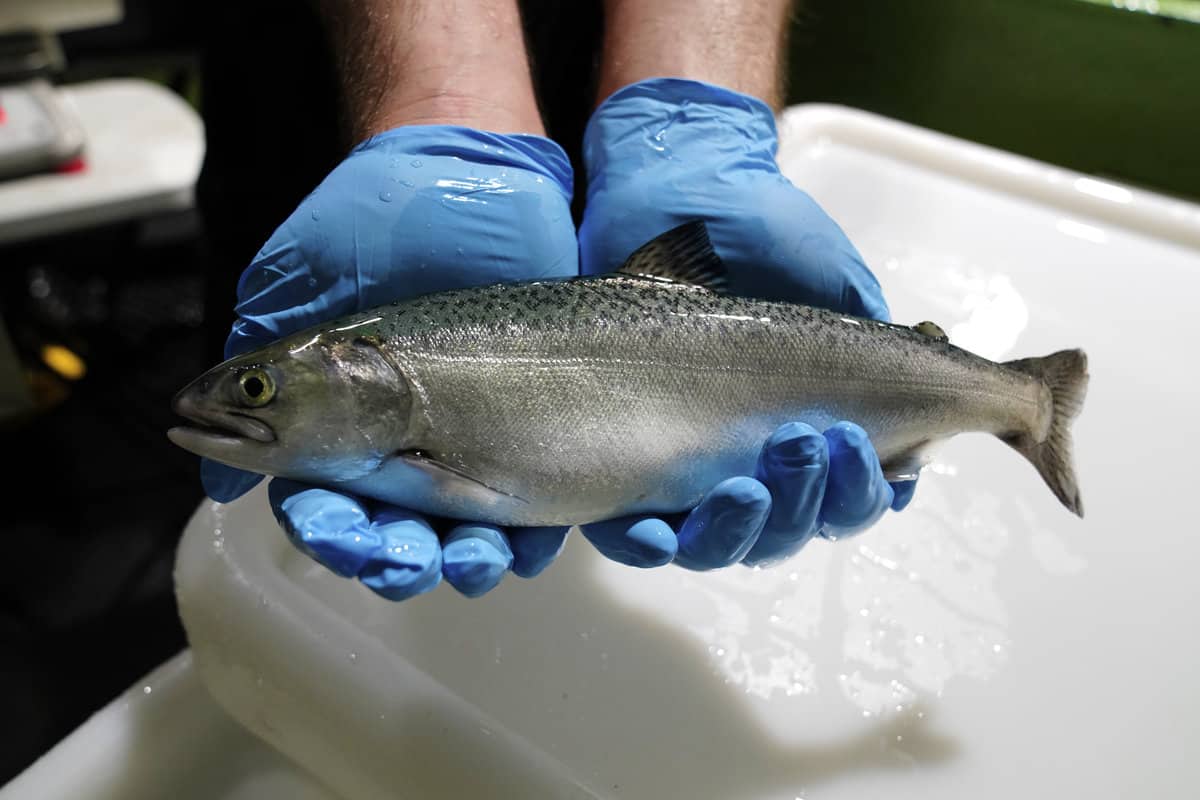
Image: Cawthron Institute.
Jane Symonds
Senior Aquaculture Scientist

Other Aquaculture Projects
Cawthron Institute Trust Board announces new Chair
Lindsay McKenzie has been appointed as the next Chair of the Cawthron Institute Trust Board, succeeding John Palmer who steps down after six years of service.

Case Study: Strengthening Aotearoa New Zealand’s shellfish industries through selective breeding
Cawthron Institute is strengthening New Zealand’s shellfish industry with world-leading selective breeding that delivers faster growth, higher survival, and consistent, high-quality Greenshell™ mussels and Pacific oysters. Our science, hatchery innovation, and industry partnerships are transforming aquaculture from wild spat dependence to reliable, resilient, high-performance stock.

Rachel Millar
Rachel Millar Marine Ecologist ...